
ARCHIVE
Chalk Cosmology as a theme
Edit Page “Art DeFi Journal” ‹ xDALE Real Exchange — WordPress 1. Art DeFi Magazine Editorial Essay “The light entered the darkness and the darkness comprehended it not” John 1:5 Douglas Crosdale reimagines the Big Bang as a recursive act o
Edit Page “Art DeFi Journal” ‹ xDALE Real Exchange — WordPress
1. Art DeFi Magazine Editorial Essay
“The light entered the darkness and the darkness comprehended it not” John 1:5
Douglas Crosdale reimagines the Big Bang as a recursive act of inscription—where information, not matter, is the substrate. All is composed not of matter but of information. After all, matter itself is composed of the information that defines it, so data is more fundamental. The expanding universe is explainable by the infinite expansion of information that encroaches upon the void.
The Universe as Manuscript: Nested Meaning in an Expanding Cosmos
Chalk Cosmology as Cosmic Performance
By Douglas Crosdale
Abstract.
A materialist is not herein defined as someone addicted to possessions. S/he is merely someone who sees the world as being concrete, unchangeable, and monumental. To a materialist, things exist outside himself as solid objects or discrete events. Importance and gravitas are attributed to those outside objects or events, and he reacts separately to them. This is as I was taught to see reality. Changing my mind was as difficult as converting a flat-world thinker into a modern man. “Materialism affirms the primacy of concrete, enduring reality—matter that is stable, tangible, and independent of observation—whereas quantum theory instead reveals the world as a realm of fleeting probabilities, where what is real is ephemeral, observer-dependent, and fundamentally indeterminate.”
“Where materialism seeks certainty in fixed, measurable substance, the evidence of quantum mechanics insists on a universe built from the evanescent: entities that flicker into existence only through acts of measurement and vanish back into possibility as soon as scrutiny passes.”
“Materialism builds its worldview on solid ground; quantum evidence, by contrast, withdraws the ground itself, showing that at the smallest scale, existence is not built on permanence but on continual emergence and dissolution—what is ‘there’ persists only as long as it is seen.”
This language highlights materialism as the philosophy of the “solid and certain,” while quantum evanescence reveals a world that resists grasp, its realities always flickering at the edge of disappearance. In my view, reality is more akin to what can be called chalk cosmology. More on that later. This attitude toward the universe has revitalized my self-confidence and removed many confusing mysteries. I find that I truly give less importance to events than previously, simply by realizing that I am the narrator and my power lies in merely changing my narrative. Once the perspective is sincerely grasped, delusions evaporate as easily and permanently as a belief in Santa Clause. Here is my case…
Section I: The Void and the Speck — Philosophical framing of the Big Bang as informational genesis
Section II: Gödel’s Ghost — Incompleteness as cosmic recursion
Section III: Entropy as Possibility — Shannon’s lens on expanding meaning
Section IV: Jamaican Rhythms — Cultural cosmologies as nested storytelling
Proposition: The Big Bang was actually an Informational Genesis! Not a physical thermodynamic explosion.
Visualize: A metaphorical black chalkboard with a single white dot that slowly blooms into concentric colored specks
I. The Void and the Speck
Before time, before space, before even the idea of “before,” there was the void. Not darkness, not silence — just absence. A tabula rasa. An infinite blackboard awaits inscription.
Then, a speck appears.
A single bit of information spontaneously emerged. Not a particle, not a bang, but a whisper of structure. A white dot on the blackboard. This was not the beginning of matter—it was the beginning of meaning. The speck expanded, recursively, like a thought unfolding into language.
II. Gödel’s Ghost: Incompleteness as Cosmic Recursion
Each layer of the speck birthed new complexity. But with complexity came paradox. Gödel’s incompleteness theorems teach us that no system can fully explain itself. Every nested speck—white, pink, blue—contains truths that cannot be resolved from within.
The universe, then, is not a solved equation. It is a recursive manuscript. Each layer interprets the one before it, but also generates its own undecidable propositions. Likewise, the cosmos is not a closed book—it is a self-expanding archive. A perpetual activity of creation of interpenetrating layers called dimensions, A Multiverse.
III. Entropy as Possibility: Shannon’s Lens
Claude Shannon defined information as the resolution of uncertainty. In this cosmology, entropy is not disorder—it is potential meaning. The expansion of the speck is the increase of entropy, not as chaos, but as possibility.
Each nested layer reduces uncertainty by adding structure. But structure also creates new ambiguity. The universe expands not because of thermodynamic pressure, but because of semantic recursion—the endless layering of interpretation.
IV. Jamaican Rhythms: Cultural Cosmologies as Nested Storytelling
In Jamaican cosmologies, creation is rhythmic, recursive, and layered. The Nyabinghi drum echoes the heartbeat of emergence. The Anansi story loops through trickster logic—each tale a nested truth, incomplete but resonant. The Anansi stories use clever twists and tricks, with each story leading to another lesson or truth—never complete, but always meaningful.
Duppy spirits, oral histories, and ritual call-and-response all reflect a cosmology of specks within specks. These traditions do not seek final answers. They embrace ambiguity, recursion, and layered significance. Like the expanding chalkboard, they treat the universe as a living manuscript.
V. Participatory Physics: Platform as Speck-Maker
If the universe is information, then physics is not the study of particles, but of patterns. And if meaning is nested, then cosmology must be participatory.
Crosdale’s “chalk cosmology” metaphor reimagines the Big Bang as a recursive act of inscription rather than a static origin. Drawing on performance and installation art—particularly works by Joan Jonas, Fluxus, Bruce Nauman, James Turrell, and Olafur Eliasson—this essay situates chalk cosmology within performance theory and process philosophy. Mr. Crosdale alludes to five titanic forces in contemporary art—each one reshaping how we perceive space, time, and the body. This is a scenario in which the audience and protagonist are not only one and the same, but recursively entangled in the very act of cosmological inscription. Your “chalk cosmology” reframes the universe as a participatory manuscript, where perception, interpretation, and emergence are co-authored by the observer. Let’s unpack that a bit:
🌀 Audience as Protagonist: Recursive Participation
1. Cosmology as Performance
- The essay treats the Big Bang not as a static origin but as an ongoing act—a recursive, ephemeral performance.
- This aligns with Peggy Phelan’s notion that “performance’s only life is in the present.” The chalk mark is both inscription and erasure, and the viewer is implicated in its unfolding.
2. Phenomenological Immersion
- Drawing on Merleau-Ponty, you position perception as active co-creation, not passive reception.
- The viewer doesn’t merely witness the universe—they participate in its recursive expansion, becoming a speck-maker themselves.
3. Fluxus and Open Score
- Like Fluxus event scores, the universe is an open framework, inviting infinite re-performance.
- The audience is not outside the work—they activate it. The cosmological manuscript only exists through their engagement.
4. Jamaican Rhythms and Cultural Recursion
- The Anansi stories, Nyabinghi rhythms, and duppy lore all reflect nested storytelling where meaning emerges through participation.
- These traditions don’t resolve—they resonate. The audience is always part of the loop, never outside it.
🧠 Protagonist as Observer, Interpreter, Inscriber
In this cosmology:
- The protagonist is not a character but a consciousness—a recursive interpreter of nested meaning.
- The audience is not passive but performative—each act of perception is a new chalk mark on the cosmic blackboard.
This is a radical inversion of classical cosmology. Instead of a detached observer studying particles, we have an embedded participant co-creating patterns. The manuscript is not written for the audience—it is written through them.
✨**
Origin as Performance
Rather than describing the Big Bang as a singular event fixed in the past, Douglas Crosdale’s “chalk cosmology” proposes origin as performance: ongoing, recursive, and ephemeral. Chalk, fragile and temporary, resists permanence and instead embodies an ontology of disappearance, existing vibrantly even as it vanishes.
This reframing overlaps with performance art’s critique of objecthood. As Peggy Phelan has written, “Performance’s only life is in the present.” The chalk mark—at once inscription and erasure—offers a precise material analogy for this condition.
Ephemeral Marks: Jonas and Chalk as Score
In the 1970s, Joan Jonas incorporated chalk diagrams into performances such as Organic Honey’s Visual Telepathy, where marks became provisional scores, erased as quickly as they appeared. These gestures resonate with Crosdale’s cosmic metaphor: the universe, too, is inscribed through temporary markings that guide improvisation rather than permanence.
Chalk refuses monumentality. In Crosdale’s hands, it becomes a cosmological medium, expressing the provisional nature of the Big Bang itself: not an architectural foundation but a gesture already dissolving into dust.
Fluxus and the Open Score of Origins
The metaphor equally recalls Fluxus event scores, where brief prompts invited infinite, indeterminate performances. A Fluxus score was not the work itself but the condition for its continual unfolding. In this way, Crosdale’s cosmology parallels George Brecht’s Drip Music or Allan Kaprow’s happenings: open-ended frameworks rather than finished products.
The Big Bang, understood through chalk cosmology, becomes an open score, constantly re-performed across time and matter. The universe is improvisation, not archive.
Process, Becoming, and Event
Process artists of the 1960s–70s (Robert Morris, Eva Hesse, Lygia Clark) emphasized impermanence, instability, and change over timeless form. Crosdale’s metaphor shares this lineage: cosmic chalk marks are not objects but processes of becoming.
Gilles Deleuze’s notion of the event describes transformations that exist only in their happening, not as static states. Likewise, Alfred North Whitehead’s process philosophy emphasizes “actual occasions,” temporary moments of concrescence. Chalk cosmology echoes both: each mark is an evental flash, already dissipating into recursive flow.
Chromatic Pulsations and Phenomenological Immersion
Crosdale’s metaphor of pulsating, colored chalk connects directly to perceptual installations by James Turrell and Olafur Eliasson. In Turrell’s Skyspaces or Eliasson’s Weather Project, color and light immerse the viewer, dissolving the distinction between artwork and perception.
Similarly, chalk cosmology stages the universe as an immersive performance. The “viewer” is not outside the work but inside it—consciousness participates in the very act of inscription. Here, Merleau-Ponty’s phenomenology applies: perception is not detached observation but active co-creation.
Cosmology as Performance Ontology
When read through performance theory, chalk cosmology frames the Big Bang as an ongoing act, not a discrete object. It aligns cosmology with Phelan’s ontology of disappearance and McKenzie’s performativity, asserting that existence itself unfolds through recursive inscription.
Crucially, the metaphor bridges art and science. Science imagines origins as data; art reveals them as gesture. Together, they suggest a cosmology not of permanence but of performative becoming: a universe that writes and erases itself in rhythm.
Conclusion: Origin Without Fixity
Crosdale’s chalk cosmology compresses art-theoretical insights into a new cosmological aesthetic. Like Jonas’s ephemeral diagrams, Fluxus scores, process art, and immersive light fields, chalk marks are acts of emergence and disappearance, not monuments.
By reimagining the Big Bang as a chalk inscription, Crosdale articulates a cosmology that is never complete. Origin is not finished history but ever-unfolding performance: recursive, ephemeral, participatory. In this sense, cosmology itself becomes a branch of performance art, and the universe a chalkboard of infinite gestures.
Key References
Phelan, Peggy. Unmarked: The Politics of Performance. Routledge, 1993.
Deleuze, Gilles. The Logic of Sense. Columbia University Press, 1990 .
Whitehead, Alfred North. Process and Reality. Free Press, 1978 .
Jonas, Joan. I Want to Live in the Country. Whitechapel, 2006.
Hendricks, Jon (ed.). Fluxus Codex. Harry N. Abrams, 1988.
Goldberg, RoseLee. Performance Art: From Futurism to the Present. Thames & Hudson, 2011.
Bishop, Claire. Installation Art: A Critic**
Art DeFi Magazine is not just a platform. It is a ” speck-maker”. Each contributor, curator, and reader adds a new layer of significance. Each artwork, essay, and vote is a recursive act of inscription.
We are not passive observers. We are specks within specks. Chalk marks on the infinite blackboard. Writers of the cosmos.
Contributor Prompt: Add Your Speck
🟣 What is your white speck—your genesis insight?
💗 What pink layer of significance do you bring to the archive?
🔵 What blue relational logic connects your speck to others?
🌈 What multiverse of meaning do you imagine?
Scan the QR code. Add your speck. Expand the manuscript.
The practical application of this insight allows us to control our fantasy and accept it as a self-imposed scenario. This is a scenario in which the audience and protagonist are the same, recursively entangled in the generative process of cosmological inscription. Douglas Crosdale’s “chalk cosmology” reimagines the origin and expansion of the universe as an ongoing, participatory act, where information, not matter, is primary, and meaning emerges through recursive, performance-like co-authorship between observer and cosmos.
Art DeFi Magazine is not just a platform. It is a ” speck-maker”. Each contributor, curator, and reader adds a new layer of significance. Each artwork, essay, and vote is a recursive act of inscription.
We are not passive observers. We are specks within specks. Chalk marks on the infinite blackboard. Writers of the cosmos.
Contributor Prompt: Add Your Speck
🟣 What is your white speck—your genesis insight?
💗 What pink layer of significance do you bring to the archive?
🔵 What blue relational logic connects your speck to others?
🌈 What multiverse of meaning do you imagine?
Back Cover

Join XDALE’s Art Revolution
: Transact, Patronize, Invest.
DeFi vs TradFi
Traditional financial (TradFi) systems have served us relatively well for ages. But growing misgivings about them, like the much-publicized Trump family debanking, have sent us looking for suitable alternatives.
One outcome has been the discovery of decentralized finance (DeFi), which is the essence of this article. In it, we explain what DeFi in crypto is, how it works, its advantages, risks, and future potential.
A.I. Gives Traders “3-Day Warning,” Could Transform Stock Portfolios Ad A.I. Gives Traders “3-Day Warning,” Could Transform Stock Portfolios A.I. Trading Software call to action icon Understanding DeFi (Decentralized Finance) The best way to understand DeFi is to start by defining the concept. Next, you must know the features that distinguish it from TradFi services. Finally, it is important to appreciate the sector’s role in the wider cryptocurrency ecosystem.
The Definition of DeFi DeFi is a peer-to-peer (P2P) financial system running on blockchain technology. Its foundation is smart contracts that facilitate trustless cryptocurrency transactions between trading parties. The system offers everything traditional finance (TradFi) set-ups do, such as lending, borrowing, insurance, and trading.
The sector is one of the most burgeoning ones within crypto, with a total value locked (TVL) of $148.991 billion at press time, a massive growth from roughly $800 million in January 2020.
What is DeFi in Crypto? What is DeFi in Crypto? How DeFi Differs from Traditional Finance DeFi and TradFi are distinct approaches to managing financial systems. While the latter relies on gatekeepers to facilitate transactions and services, DeFi uses blockchain technology and smart contracts to bypass intermediaries. The table below outlines their key differences.
Related video: Why Blockchain Matters More Than You Think! (Viral Tech) You are watching Cold Fusion TV. Current Time 0:01 / Duration 14:56 Viral Tech Why Blockchain Matters More Than You Think! 0 View on Watch View on Watch Why DeFi Matters in the Crypto Ecosystem Decentralized Finance is vital to the crypto ecosystem as it enables financial services without intermediaries. This aspect democratizes access, allowing anyone with internet and a crypto wallet to participate.
Moreover, its transparency builds trust between counterparties through code. It drives innovation with tools like yield farming and automated market makers, attracting billions in capital.
By offering financial sovereignty and reducing costs, DeFi showcases crypto’s real-world utility, fueling adoption and transforming our finances.
How Does DeFi Work? DeFi uses interconnected technologies to provide intermediary-free financial services. Here’s a breakdown of the nuts and bolts that make it tick:
Smart Contracts on Blockchains (Ethereum, Solana, BSC) Smart contracts are the heart of the DeFi crypto ecosystem. These self-executing digital agreements direct transactions happening on the blockchain. Unlike typical contracts that rely on a trust agent, these automatically complete trades once the transacting parties meet their ends of the bargain.
However, they are also making headway in newer DeFi-centric networks like Solana and Binance Smart Chain (BSC).
The Role of Decentralized Applications (dApps) Accessing DeFi protocols would have been challenging were it not for dApps, the websites, and mobile applications linking you to smart contracts. These run on permissionless networks, giving you full control over your funds and data.
Some common dApps include decentralized exchanges (DEXs) such as Uniswap, lending protocols including Aave, non-fungible tokens (NFTs) marketplaces like OpenSea, and crypto wallets as MetaMask.
Liquidity Pools and Automated Market Makers (AMMs) The last key cog in the DeFi juggernaut is a set of interdependent concepts, liquidity pools, and automated market makers (AMMs). The first are smart contract-based reserves of crypto pairs. For example, an ETH/USDC pool typically contains equal dollar values of both digital assets.
Book now to EL SALVADOR Ad Book now to EL SALVADOR Volaris call to action icon Users (liquidity providers) deposit their tokens into these community-driven “trading pots,” for which they earn trading fees proportionate to their contributions. AMMs then kick in, providing the mechanism for using liquidity pools.
These protocols use algorithms to price assets based on the available liquidity. They are similar to the conventional order book, only that they are trustless, and instead of matching buyers and sellers, they link them to liquidity pools 24/7.
Key Features of DeFi Though upending the traditional financial system will take a while, DeFi is creating compelling user-first alternatives. And as the technology matures, the following core features will play a big role in its adoption.
Permissionless and Open Access DeFi is your hustle-free ticket to crypto trading and investments. Forget the lengthy application process, rigorous checks, and slothful approvals characteristic of TradFi systems. You only need a stable internet connection and a crypto wallet to start.
There are no minimum balance requirements, geographic restrictions, or discrimination based on your background or status. This all-embracing approach breaks down the barriers that have historically denied some people financial services.
Transparency and Auditability TradFi service providers are often opaque about their actions and functions. Not so with DeFi. Since these systems run on blockchain and smart contract tech, their transactions are publicly accessible.
You can track money flows, verify how protocols manage funds, and even audit their smart contracts for vulnerabilities. This level of openness pushes accountability, increasing the whole system’s trustworthiness. Plus, it levelizes the playing field for all users.
Non-Custodial Control of Assets Unlike in centralized finance (CeFi), where service providers hold your funds, DeFi gives full control of your assets through private keys. Your crypto wallet acts as a digital safe for which only you have the keys, and you manage it through smart contracts.
This non-custodial approach shields you from counterparty risks like debanking and bankruptcy. Besides, you have 24/7 access to your funds and a say in the protocol’s governance decisions.
Interoperability with Other Protocols One of DeFi’s key draws is that it supports seamless connection and data sharing across protocols. This feature allows you to combine different tools, creating new financial products and experiences customized to your needs.
For instance, you can borrow ETH on one protocol, lend it on a different one, and stake your profits on another. This interoperability fuels innovation far beyond the siloed TradFi systems.
Examples of DeFi Applications From trading and lending to creating stable assets and beyond, DeFi is reshaping how we interact with money. Here’s a look at some of the most exciting applications driving this revolution.
Decentralized Exchanges (DEXs) like Uniswap & Curve Imagine trading cryptocurrencies without relying on a third party like a centralized exchange. That’s exactly what decentralized exchanges do.
Platforms like Uniswap and Curve allow users to swap tokens directly in a completely trustless and transparent way. Their innovative use of liquidity pools means you can trade with lower fees and enjoy seamless access to diverse assets.
Lending & Borrowing Platforms like Aave & Compound Do you have idle assets you’d want to invest in for gain? DeFi has your solution through its credit offering platforms like Aave and Compound. These P2P crypto lending marketplaces allow users to loan each other at interest.
All it takes is depositing your holdings into a lending pool from which borrowers take loans. Smart contract technology and market forces determine the interest rates. You can also borrow funds from the said pools upon providing some security.
Stablecoins and MakerDAO’s DAI Perhaps crypto’s greatest infamy is its wild price swings. Luckily, we have stablecoins. These cryptocurrencies strive for stability by pegging their values to steady assets, typically fiat currencies like the USD.
MakerDAO’s DAI stablecoin takes this pegging a notch higher. Instead of shoring its value with real-life dollars, it uses a smart contract-run vault of other cryptocurrencies. This shift makes it a truly decentralized stablecoin.
DAI and other stablecoins are a boon to the DeFi ecosystem. Their stability makes transacting, saving, and building other financial products easy.
Yield Farming & Staking If you’re looking for ways of creating passive crypto income, yield farming and staking are some of the easiest ways of doing so. In the former, farmers (investors) provide DEXs and lending protocols with liquidity in exchange for rewards. The process involves moving funds from one protocol to another, looking for the best yield (returns), hence the term.
Meanwhile, staking involves locking your crypto to support proof-of-stake (PoS) blockchains like Ethereum. It’s akin to holding a dividend stock in TradFi. Your deposit helps secure the network and validate its transactions, for which it pays you back with staking rewards (dividends) in tokens.
DeFi Insurance & Synthetic Assets Beyond lending and trading, decentralized finance crypto is big on securing and futureproofing your investments. That’s the reason behind cutting-edge products like DeFi insurance and Synthetic assets.
The former works like your regular insurance, albeit decentralized. DeFi insurance platforms, such as Nexus Mutual, cover you against losses resulting from smart contract hacks and exploits or platform failures.
Synthetic assets, on their part, are digital tokens mirroring prices of real-world assets (RWA) like securities, commodities, and even fiat currencies. Outlets like BitShares, Synthetix Network, and Mirror Protocol allow you to mint synths – synthetic versions of RWA – without holding the actual asset. For instance, you can trade synthetic Apple stock (sAAPL) without owning the tech giant’s shares.
By tokenizing RWA, synths open up a new frontier of decentralized trading without the limitations of time and geographical location.
Benefits of DeFi Whether it’s reaching the unbanked, reducing transaction costs, or enabling borderless trades, DeFi brings financial services to a broader audience in smarter, faster ways.
Accessibility for the Unbanked The World Bank estimates that nearly 1.4 billion people don’t have access to formal financial systems, which keeps them in poverty. Defi crypto offers a lifeline to this unbanked population by simplifying their onboarding to financial products and services.
A smartphone and internet connection are all one needs to start saving, borrowing, lending, and investing, no matter how far-flung they may be globally.
Lower Costs and Faster Settlements Decentralized finance crypto operates on a P2P basis, thus cutting out intermediaries and significantly impacting transaction speeds and costs. With DeFi, users needn’t go through go-betweens, hastening settlement times while saving on transaction fees.
Transparency and Global Reach All DeFi transactions occur on a public blockchain, allowing for easy verification. Additionally, it’s a permissionless system, meaning you can trade with anyone, anywhere, worldwide. This aspect makes it a truly borderless financial setup.
Risks and Challenges of DeFi It isn’t always sunshine and rainbows in the DeFi space. That’s because the same openness and innovation that make it a novelty come with risks you should understand before diving in.
Smart Contract Exploits & Hacks Code is the cornerstone of smart contracts, but these can have vulnerabilities, turning them into a hacker’s playground. Hackers exploit buggy or flawed smart contracts to drain funds from affected crypto Protocols.
For example, a hacker in the 2022 Poly Network attack 2022 made away with over $600 million. Mitigating such events calls for regular third-party audits of any protocol’s smart contract to reveal any errors for timely corrections.
Rug Pulls and Fraudulent Projects One of decentralized finance crypto’s strongest points, permissionlessness, is ironically its weakest link too. Its openness attracts everybody, including those with malicious intentions.
Grifting is a common occurrence here, with rug pulls leading the way. In this scam, unscrupulous developers hype a new project, attracting unwitting investors. They then withdraw the funds, leaving their victims holding worthless tokens.
To avoid falling for such schemes, you must research projects thoroughly. Also, be extra vigilant about projects promising impossible returns.
Regulatory Uncertainty DeFi is still in its nascency. Consequently, many governments are still grappling with how to classify and regulate the different asset classes falling under its ambit.
This uncertainty creates risks for developers and users, as new regulations could impact the legality or functionality of certain protocols/products. Overcoming this challenge requires watching crypto regulation news and trends in your jurisdiction.
Scalability and High Gas Fees While the growing adoption of DeFi is a major boost for mainstreaming crypto, it comes with a special challenge – the scalability of existing infrastructure. Most popular protocols run on the Ethereum blockchain, which is prone to clogging in periods of high traffic.
This network congestion causes high gas fees, making it uneconomical for small transactions, thus pricing out many potential users. Layer 2 solutions and alternative blockchains offer relief, but often at the cost of security or decentralization, the classic blockchain trilemma.
The Future of DeFi in 2025 and Beyond The decentralized finance sector is quickly positioning itself as an integral part of the global financial landscape. And looking at 2025 and beyond, several key trends are shaping what its future could look like.
Institutional Adoption Once skeptical of the concept, TradFi institutions like banks and asset management firms are now actively embracing DeFi.This institutional adoption deepens liquidity, reduces volatility, and increases the sector’s legitimacy.
But importantly, it creates a feedback loop where we reimagine TradFi concepts through decentralized lenses, creating more hybrid products such as BlackRock’s BUILD tokenized fund. Expect permissioned DeFi protocols to snowball as custody solutions mature and regulatory frameworks solidify.
Real-World Assets (RWAs) in DeFi RWAs are increasingly entering DeFi, buoyed by their rapidly maturing infrastructure. Today, Oracle networks provide reliable price feeds for non-crypto assets, while legal frameworks are emerging to ensure proper asset backing and compliance.
Moreover, Smart contracts are evolving to handle complex asset characteristics like dividend distributions and voting rights. As this infrastructure solidifies, we’ll likely see traditional assets migrating to blockchain-based systems not as an alternative, but as the primary method of issuance and trading.
Role of Layer 2 and Cross-Chain DeFi High gas fees and slow transaction times have long plagued Ethereum, DeFi’s hub. However, Layer 2 (L2) scaling solutions like optimistic and zero-knowledge (ZK) rollups are changing the game. These “express lanes” run on Layer 1 blockchains, allowing off-chain transaction processing.
Thus, they increase throughput and drastically reduce costs, making DeFi applications accessible. Meanwhile, cross-chain DeFi through sidechains and bridges supports the seamless movement of assets and data across blockchains. This is essential for a future where users won’t care about which network they’re on, as liquidity becomes more unified across the entire crypto ecosystem.
Regulation and Mainstream Integration Governments and financial bodies worldwide are actively working on regulating digital assets. While some purists may view this as a threat to decentralization, it’s a necessary step for mainstream DeFi integration.
We’re seeing more regulation on stablecoins and digital securities, through legislation like the EU’s MiCA framework and the US’s Genius Act. These laws will provide legal certainty and encourage institutional participation.
Regulatory clarity will pave the way for DeFi to become a more legitimate and accessible alternative to traditional finance
Today’s Feature Article: The Hypsoverse
Today’s Feature Article: The Hypsoverse
- Arbitrage typically involves transactions of a common asset across multiple markets to exploit price differences. Rollups and illegal front-running transactions illustrate an approximation of the arbitrage concept within a single market.
- Swapping ERC20 tokens for ERC721 tokens does not constitute traditional arbitrage. Arbitrage typically involves exploiting price differences for identical or similar assets across different markets to generate profit through simultaneous buying and selling. Conversely, exchanging ERC20 tokens for ERC721 tokens represents trade between two distinct asset types—fungible tokens (ERC20) and non-fungible tokens (ERC721)—rather than leveraging price discrepancies across multiple markets.
- However, Swapping between security tokens and utility tokens can offer several benefits to investors such as diversification and, flexibility,
- Diversification
- Security Tokens: Represent ownership in real-world assets like real estate, equity, or funds. They provide dividends, profit-sharing, and potential appreciation2.
- Utility Tokens: Grant access to specific products or services within a blockchain ecosystem. They are not intended for investment but for use within a platform.
- Flexibility
- Security Tokens: Allow investors to hold fractional ownership in high-value assets, making traditionally illiquid assets accessible3.
- Utility Tokens: Enable participation in a platform’s services, such as paying transaction fees or accessing premium features.
- Regulatory Compliance
- Security Tokens: These are regulated and must comply with securities laws, providing a degree of investor protection and market integrity.
- Utility Tokens: Are generally not subject to the same stringent regulations, offering more flexibility in their use and distribution.
- Potential for Returns
- Security Tokens: Offer potential returns through dividends, profit-sharing, and appreciation in value3..
- Utility Tokens: While not designed for investment, their value can increase based on the success and adoption of the platform.
- Access to Different Markets
- Security Tokens: can provide access to traditional investment markets like real estate and equity.
- Utility Tokens: Offer access to innovative blockchain-based services and platforms.
- Hedging and Risk Management
- Security Tokens: These can be used to hedge against market volatility by holding assets with intrinsic value3.
- Utility Tokens: Can be used within the ecosystem to reduce transaction costs and gain access to services, providing a different form of value.
- By being able to swap between these two types of tokens, investors can strategically manage their portfolios, balancing between the stability and potential returns of security tokens and the utility and flexibility of utility tokens.
- Examples of trades that seek to mimic arbitrage involve swapping ERC20 and ERC721 tokens may be exemplified by:
- (a) Front-running NFT Transactions: An arbitrage bot took advantage of a front-running opportunity using a flash loan to obtain an ERC721 NFT at a lower price before a bid transaction was processed, resulting in a profit of 26.25 ETH. Arbitrage front-running is an illegal and unethical practice in financial markets. It occurs when a broker or trader uses non-public information about an imminent large transaction to profit. For instance, a broker knowing that a client is about to purchase a large quantity of shares in a company, which would likely increase the share price, buys shares for themselves first, then places the client’s order, and finally sells their shares at a higher price, making a profit. This constitutes illegal insider trading.
- (b) Rollups: A roll-up is a Layer 2 solution that processes transactions off the main blockchain (Layer 1) to reduce congestion and increase throughput. The processed transactions are then bundled and posted back to the main blockchain. Layer 2 (L2) roll-up systems are designed to enhance the efficiency and scalability of blockchain networks, especially Ethereum.
- How Do Roll-ups Work?
- Off-Chain Transactions: Transactions are processed off-chain on a roll-up network, reducing the load onto the main (Layer 1) blockchain.
- Batching: Multiple transactions are grouped into a single batch, that is then submitted to the main blockchain, decreasing the number of transactions on Layer 1.
- Security: The main blockchain (Layer 1) still provides security by ensuring that transaction data and proofs posted to Layer 1 are verifiable and censorship-resistant.
- Types of Roll-ups: There are two primary types of roll-ups:
- Optimistic Roll-ups: These assume all transactions are valid by default and post transaction data to Layer 1 without submitting proofs, allowing a challenging period during which anyone may dispute the validity of a transaction by providing fraud proof.
- Zero-Knowledge (ZK) Roll-ups: These use cryptographic proofs to verify transactions’ validity. The proofs, along with transaction data, are submitted to Layer 1, ensuring only valid transactions are processed.
- Benefits of Roll-ups:
- Scalability: Processing transactions off-chain significantly increases transaction capacity.
- Reduced Gas Fees: Fewer transactions on Layer 1 result in lower gas fees.
- Security: Roll-ups rely on the main blockchain’s security to ensure transactions are secure and verifiable.
- Use Cases:
- Decentralized Finance (DeFi): Roll-ups are used in various applications, including decentralized finance.
- NFT Marketplaces: They also support NFT marketplaces and other blockchain-based services requiring high throughput and low transaction costs.
- Optimistic Rollup: This Layer 2 scaling enhances efficiency by offloading transaction processing and smart contract execution from the main blockchain. By batching transactions and reducing on-chain operations, it minimizes transaction fees. However, it introduces vulnerabilities, particularly related to transaction ordering.
- Optimistic Rollup Exploits: The PAROLE technique demonstrated how reordering NFT transactions on Layer 2 optimistic rollups could create arbitrage opportunities, especially for limited-edition ERC721 tokens due to their scarcity-driven pricing.
- PAROLE Technique: Standing for “Profitable Arbitrage in Optimistic Rollup with ERC-721 Token Transactions,” the PAROLE technique in blockchain technology exploits optimistic rollup systems.
- Validation: The PAROLE technique was validated by creating an NFT called the “PAROLE Token” (PT) and deploying it in the OpenSea marketplace via Optimism Goerli.
- Mechanism:
- Transaction Reordering: An adversarial aggregator (sequencer) reorders NFT transactions optimally to maximize a target account’s balance using model-free deep reinforcement learning (DRL).
- Exploiting Scarcity: The technique is particularly effective with limited-edition ERC-721 NFTs due to their scarcity-driven pricing and market volatility.
- Impact: The reordering of transactions introduces a profitable threat landscape, allowing the adversarial aggregator to profit from arbitrage opportunities created by manipulated transaction orders. This can significantly impact users financially and poses a systemic risk to the L2 roll-up system.
February 1, 2025
Dear Ms. ambitious minority retiree,
re:XERIES (XER). The Art Patron Token
How was the sermon this Sunday? How is retirement working for you? Have you been underperforming at Shaklee or Amway?
As a speculator are you perhaps intimidated by Wall Street cowboys? Here is an aesthetic flavor of investment that may suit both your sensibilities and ambitions.
Why you should consider X-sERIES Token (XER )as an investment:
Its dual purpose Opportunity to
2- Attain Status and Prestige as a recognized Art Patron
About Tokens:
There are two main classifications of tokens, security tokens like bitcoin, and utility tokens like NFTs. All tokens must have a stated purpose. Security tokens have a single purpose, to be currency or mediums of exchange. Various NFTs each has its unique purpose. For instance an NFT’s purpose could be to represent artwork or other collectible item; another could represent a voting ballot, another could represent a tenant’s rent payment, and so forth. Just like Bitcoin and Ethereum, X-series is a security token. But it is supported by underlying NFTs. The utility of Xer is proof of fractionalized contribution to sponsorship of _a specific work of art.****_ The main benefit of XER’s utility is that it removes the zero-sum nature of art patronage. A secondary benefit is that it has a dual role that allows for swapping between its utility role and the role as a security. This occurs via a swap exchange.
A convenient feature of XER to traders (asset buyers) is that they can be reassured of its underlying value in its role as a security because it is pegged to tangible artwork.
xDALE provides a blockchain-based platform that revolutionizes art patronage through NFTs (Non-Fungible Tokens). It introduces “Proof of Contribution” NFTs that reward holders based on the appreciation of funded artworks. User-minted NFTs bought with XERs, once locked,also grant access to private sales and discounts.
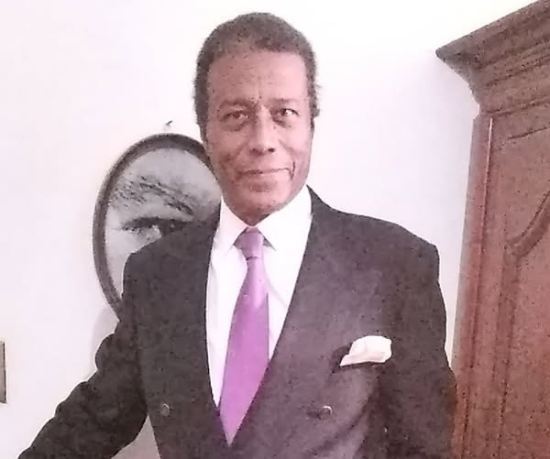
xDALE Founder Doug Crosdale, aims to democratize art funding and provide physical spaces for exhibitions, leveraging decentralized and transparent systems to enhance access to art projects. “We have created a dynamic and rewarding patronage system that benefits us and our patrons. This approach encourages engagement, provides financial incentives, and supports the acquisition and maintenance of valuable artwork. “, he said. “Our first mission is to pitch the crowdfunding of Masterworks pegged to the XER token. The second step is the accelerated trading of the XER token to enhance its popularity and value.
To this end, we have developed our own NFT Marketplace where art patrons can buy / Sell NFTs from us using XER. They can also swap their NFT for XER futures, swap XER with any other altcoin, swap altcoin for USDT (stable coin ) and finally swap USDT for fiat currency such as cash.“
The purpose of a USDT is to be a surrogate of a fiat currency. It is also known as Tether and is a type of cryptocurrency classified as a stablecoin. Unlike other altcoins, which can have significant price fluctuations, a USDT is designed to maintain a stable value by being pegged to a fiat currency, usually the US dollar. This means that 1 USDT is typically equal to 1 USD, thereby providing a reliable option for trading and transactions within the cryptocurrency market.
Thus, while USDT is technically an altcoin because it is an alternative to a security token like Bitcoin, its primary purpose is to offer stability rather than the potential for high returns through price appreciation
XER is to be traded on a Decentralized Exchange.
PancakeSwapTM is a decentralized exchange (DEX) that operates on the BNB Chain (formerly Binance Smart Chain). It allows users to swap various cryptocurrencies without the need for a centralized intermediary. Here’s a detailed breakdown of how it works and its key features:
Unlike traditional exchanges, PancakeSwap uses an Automated Market Maker (AMM) model, which relies on liquidity pools rather than order books.
Key Features of PancakeSwapTM
- Token Swaps: Users can swap BEP-20 tokens on the BNB Chain. PancakeSwap also supports tokens from other blockchains, such as Ethereum, through cross-chain bridges. Users can swap one cryptocurrency for another directly on the platform. This is done through liquidity pools, where users provide liquidity by depositing their tokens.
- Liquidity Pools: Users can provide liquidity to various pools and earn a share of the trading fees.These pools are essential for the AMM model. Users who provide liquidity to these pools earn Liquidity Provider (LP) tokens, which represent their share of the pool. They also earn a portion of the trading fees generated by the pool.
- Yield Farming: Users can stake their LP tokens in yield farms to earn additional rewards, typically in the form of PancakeSwap’s native token, CAKE.
- Staking: Users can stake CAKE tokens to earn more CAKE or other tokens. This process is known as Syrup Pools.
- Perpetual Trading: PancakeSwap offers perpetual trading with leverage, allowing users to trade with borrowed funds.
- Governance: CAKE token holders can participate in governance decisions, such as proposing and voting on changes to the protocol.
- NFTs and Web3 Games: PancakeSwap also offers non-fungible tokens (NFTs) and Web3 games, adding a layer of gamification to the platform.
Setting Up and Using PancakeSwap
To use PancakeSwap, you’ll need:
- A Crypto Wallet: Popular options include MetaMask, Trust Wallet, and Binance Chain Wallet.
- BNB Tokens: These are used to pay for transaction fees on the BNB Chain.
- XER Cryptocurrencies to Exchange or Stake: You’ll need the XER tokens you want to swap or to provide as liquidity.
Advantages of PancakeSwap
- Low Fees: Transactions on the BNB Chain are generally cheaper than those on Ethereum.
- High Speed: The BNB Chain offers faster transaction times compared to Ethereum.
- Wide Range of Features: PancakeSwap offers a variety of DeFi services, including token swaps, yield farming, and staking.
PancakeSwap has become one of the leading DEX platforms due to its user-friendly interface, low fees, and wide range of features.
To effectuate our mission, w_e use the backend contracts of a Pancake Swap instead of our own contracts and write the front end of our own app so that we can pin XER at the top position. In this way, we use the liquidity of Pancake and run on the Binance chain as well_ “.
Note: Currently Binance can run in the USA, but with some restrictions. Binance.US is a separate platform specifically designed for US residents. It offers a range of services, including buying, selling, and trading over 150 cryptocurrencies. However, it’s not available in all states. For example, Binance.US services are not available in states like New York, Texas, and a few others.
Binance.US is available in most states, but there are some exceptions. Here are the states where Binance.US is available:
- Alabama
- Arizona
- Arkansas
- California
- Colorado
- Delaware
- District of Columbia
- Florida
- Hawaii
- Idaho
- Illinois
- Indiana
- Iowa
- Kansas
- Kentucky
- Louisiana
- Maryland
- Massachusetts
- Michigan
- Minnesota
- Mississippi
- Missouri
- Montana
- Nebraska
- Nevada
- New Hampshire
- New Jersey
- New Mexico
- Oklahoma
- Pennsylvania
- Puerto Rico
- Rhode Island
- South Carolina
- South Dakota
- Tennessee
- Utah
- Virginia
- Wisconsin
- Wyoming
Unfortunately, Binance.US is not available in the following states:
- Alaska
- American Samoa
- Connecticut
- Georgia
- Guam
- Maine
- Northern Mariana Islands
- New York
- North Carolina
- North Dakota
- Ohio
- Oregon
- Texas
- U.S. Virgin Islands
- Vermont
- Washington
——————Transact Analog Art — Transact Your Collection— Become an Art INVESTOR
[XDALE has launched its first batch of Art Patronage NFTs (unique digital tokens). These tokens, inspired by XDALE’s founder Doug Crosdale, are meant to revolutionize art patronage with the help of the crypto community.
Project Highlights
Art Patronage Project (APP)
This project will create a physical art space in a commercial shopping mall for interior designs, sculptures, and more.
The project will provide wall space, studio space, and exhibition space.
The project offers rewards in XER tokens and costs 195 USDC plus 380 XER tokens per NFT mint.
Support and Rewards
XDALE NFTs act as proof of contribution, providing rewards based on the increased value of artworks funded by contributions.
XER token holders can participate in new project sales and receive discounts on future NFTs.
Rewards are proportional to the number of tokens locked.
Staking and Converting
After necessary changes are made, a staking contract will go live, yielding XER tokens from auction bids.
Users can convert XER to USDC through XDALE’s decentralized swap exchange, DALEx.
Leadership Statements
Doug Crosdale (Founder): Emphasized XDALE’s dedication to its vision and objectives. He mentioned that the system is decentralized and transparent thanks to the blockchain.
Paolo Pastore (Managing Director): Highlighted the flexibility that NFTs bring to art patronage, allowing contributions to remain liquid (easily bought and sold) rather than locked in for the entire project duration.
XER Token Details
Contributing to Art Patronage Projects is reserved for XER token holders who lock their tokens for the duration of the project.
Locked tokens generate rewards from 1% of platform savings and approved Art Patronage Projects.
Every XDALE NFT is proof of contribution and comes with utilities attached, offering rewards from the increased value of artworks.
NFT holders can participate in private sales for new projects, reserve more NFTs, and get discounts on XER usage.
Artworks and Staking
Artworks inspired by Doug Crosdale will be revealed when the project is implemented, alongside the launch of the NFT staking contract.
Both projects will feature unique and rare artworks.
The staking contract will yield XER tokens based on auction bids from platforms like Open Sea and Christie’s.
Users can convert XER tokens to USDC via DALEx.
Financial Aspects
There is a minimum APR of 8%, which can go up to 40% after five years.
If the XER NFT mint sells out, at least 1.4 million XER tokens will be distributed to NFT stakeholders.
Commitment
XDALE is fully committed to supporting the project.
Unsold NFTs will be removed from the market and burned.
Rewards tied to XDALE’s capital will be allocated to the project.
In summary, XDALE is using NFTs and blockchain technology to create a flexible and rewarding way to support art patronage projects.: Chalk Cosmology as a theme](https://xdale.io/chalk-cosmology-as-a-theme/)
——————Transact Analog Art — Transact Your Collection— Become an Art INVESTOR
Read more: Chalk Cosmology as a theme
——————Transact Analog Art — Transact Your Collection— Become an Art INVESTOR